Table of content
Dear friends,
I’ve been wanting to write this for a while, and the results of your midterm elections on 3 November 2026 gave me the push. I don’t usually write about what happens in other countries. It’s not my place, and every country has its own story. But what happens in a country like yours rarely stays there: it reaches our trade, our climate, our peace, and even the way the rest of us think about democracy. So in a way, it’s a bit our story too.
Please don’t read this as a lecture, or as a “look how well we do it” letter. It’s a note from a friend across the ocean who has been worried about you, who is relieved to see you getting back on your feet, and who would like to share a few ideas that might help you stay there. After all, you once did the same for us.
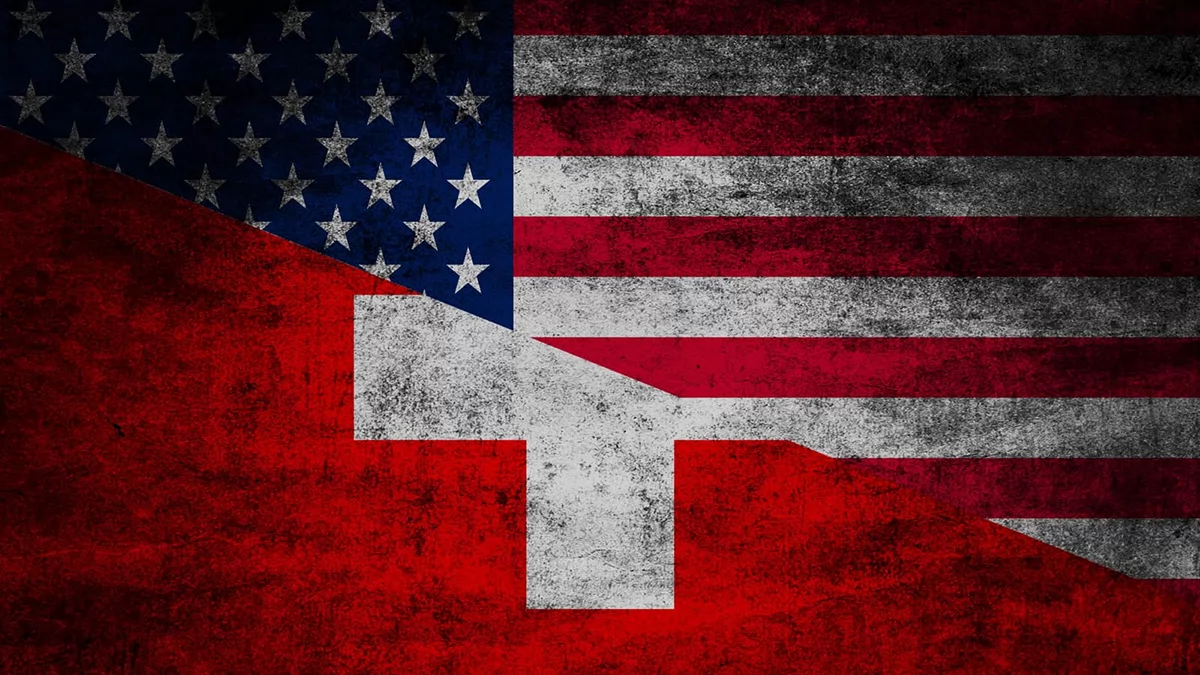
You’ll find plenty of links along the way, for further reading (they’re also listed at the end), such as this one about our two “sister republics”.
Maybe it’s time you copy us back
My suggestion fits in a few lines. In 1848, Switzerland copied your Constitution. We kept your federal state and your two chambers, and over the years we changed three things:
- We replaced the single president with a government of seven equals.
- We share the seats of that government between the main parties, so no camp ever holds all of it.
- We gave the people the right to overrule parliament and to change the constitution themselves. At any time, citizens can collect signatures, and once they have enough, the whole country votes on the question (the details are further down, under “The people in charge, at every level”).
Those three changes are why a power grab is so hard to pull off here. After the two years you’ve just lived through, and with the next swing of the pendulum still ahead of you, I think they deserve a look. You lent us the model 178 years ago. Maybe it’s time you copy us back.
The rest of this letter tells where the model came from, how our version works, why I think you need it now, and where it has failed us too.
First, thank you
In 1787, delegates met in Philadelphia at the Constitutional Convention and wrote your Constitution. They signed it on 17 September 1787, and it came into force in 1789. George Washington presided, and James Madison (often called the father of the Constitution) did much of the thinking. Alexander Hamilton and Benjamin Franklin were there too, and Gouverneur Morris wrote the final wording. Roger Sherman proposed the famous compromise: a House where seats follow population, and a Senate where every state, big or small, has two votes.
The ideas behind it came from Europe. Montesquieu gave them the separation of powers (Madison called him “the oracle” on the subject). John Locke gave them government by consent of the governed and natural rights. And, a little wink from my city, two Genevans were on their bookshelves too (maybe the most important link of this whole letter): Jean-Jacques Burlamaqui, who, some historians argue, was the first to present the pursuit of happiness as a natural right, and his disciple Emer de Vattel, whose book on the law of nations the founders read closely.
From them came the principles: power belongs to the people, it’s split between branches that check each other, it’s shared between the union and the states, rights are protected, and nobody is above the law.
In 1787, your founders also looked at the old Swiss confederation, and decided it was an example of what not to do. Hamilton said the Swiss didn’t really form a unit. Honestly, he had a point: we were a loose, quarrelling league of cantons.
Then, in November 1847, we had a short civil war (the Sonderbund war, less than a month). On New Year’s Day 1848, the philosopher Ignaz Paul Vital Troxler published a pamphlet proposing your Constitution as the model for our reform. The committee drafting our new constitution took his advice. On 12 September 1848, modern Switzerland was born, with a federal state and a parliament in two chambers copied from yours: the National Council for the people (our House equivalent), and the Council of States for the cantons (our Senate equivalent), so the small ones keep their voice.
So, thank you. Really.
What we changed
We didn’t copy everything. We never had a president with real power, and chose a government of seven people instead. Our parliament elects our federal judges, and our Federal Court is not a constitutional court: the last word on the constitution belongs to the people, through votes. A few decades later, we added the referendum and the popular initiative. In 1919, we moved to proportional representation, which pushes parties to work together rather than take turns.
What follows is an open-source recipe, and you’re free to fork it.
A government of seven equals
Our executive, the Federal Council, has seven members, elected by parliament for four years. None of them is the boss. The presidency rotates every year, and the president is only “first among equals” (in 2026 it’s Guy Parmelin, a winegrower from the canton of Vaud). The president also represents the government at home and abroad, because the rest of the world likes to have one face to talk to. Officially, though, our head of state is the whole Federal Council: when a foreign head of state visits, all seven receive them together. Decisions are taken together, and once a decision is made, even the members who disagreed have to defend it in public. We call that collegiality.
The magic formula
Since 1959 (with a short break between 2008 and 2015), the seats have been shared between the main parties according to their strength. We call it the “formule magique”, the magic formula. Today it’s two seats for the Liberals (FDP), two for the Swiss People’s Party (SVP), two for the Social Democrats (SP) and one for the Centre. Left, right and centre sit at the same table, every week. So no new team arrives every few years to tear down what the previous one built. No do, undo, redo, and no billions wasted every time the wind turns. Laws last, because the opposition helped write them.
The people in charge, at every level
This is the part I feel most lucky about, and I never take it for granted:
- Popular initiative: collect 100,000 signatures in 18 months, and the whole country votes on your proposal to change the constitution.
- Optional referendum: if parliament passes a law you don’t like, collect 50,000 signatures in 100 days, and the people decide.
- Mandatory referendum: every change to the constitution has to be approved by the people and the cantons.
The same tools exist in cantons and municipalities, with far fewer signatures needed (each canton and municipality sets its own numbers), for a new school, a tax, a road. We vote about four times a year. That’s the main reason for our stability: politicians know that anything they do can be put to a vote, so they consult, compromise and explain before deciding.
No political ads on TV and radio
In Switzerland, paid political advertising is banned on radio and television. It’s allowed elsewhere, so we do have posters, newspaper ads and online campaigns, and money still matters. But nobody can buy the evening news break to flood your living room with attack ads. The European Court of Human Rights agreed the ban is legitimate (pdf file): it stops financially strong groups from buying an advantage in politics.
Public servants, not rock stars
Our ministers are here to serve, and it shows. In 2014, a photo (article in French) of Swiss President Didier Burkhalter waiting alone for his train on the platform in Neuchâtel, tapping on his phone among other passengers, went around the world. The Federal Chancellery itself noted in 2008 (pdf file) that our Federal Councillors could still mingle with crowds without special security or bodyguards. Every summer, the whole government goes on a little trip around the country and shares an apéro with whoever turns up, with local wine and cheese.
Security has grown a bit in recent years, but it’s nothing like motorcades and armoured cars.
My favourite detail: ask people in the street to name all seven members of our government, and plenty of Swiss will get stuck after three or four. In most countries, that would be a scandal. Here, it’s almost a compliment: they do their job without fuss, and they don’t need to be famous to do it.
Guy Parmelin, our president in 2026, is a master farmer and winegrower. “Paysan je suis, paysan je resterai dans l’âme” (a farmer I am, a farmer I’ll stay at heart), he said as a new minister. When his canton celebrated his election in December 2025, his train stopped at the first village in Vaud, Oron-le-Châtel, and the glasses of wine went up with the locals on the platform.
[Photo 1: Guy Parmelin with a glass of wine, add from source]
[Photo 2: a federal councillor on a train or a platform (Burkhalter in 2014, or Parmelin), add from source]
Why I’m writing now
What the midterms solve (and what they don’t)
Donald Trump is still the president, and he will be until January 2029. But on 3 November 2026, Democrats won both the House and the Senate, flipping Senate seats in at least eight states, including Kansas, which hadn’t elected a Democratic senator in nearly a century. The Alaska Senate race and a few House seats were still being counted when I finished this letter, on 16 November 2026.
What makes me happy is that the brakes work again, whichever colour won. I’d write the same letter if the colours were reversed. Which colour you choose is your business. A slide towards autocracy in the country with the world’s most powerful army and one of its two biggest nuclear arsenals is everybody’s business, because a slide like that never stays inside one border.
From January 2027, Congress can investigate again, issue subpoenas, hold the purse strings, block bills and reject nominees.
The president, though, still runs the executive, signs executive orders and leads foreign policy. Removing a president needs two thirds of the Senate. And at the next elections, in 2028 or 2030, the pendulum can swing back.
Where things stand
Since January 2025, people who study democracies for a living have watched your country move, step by step, towards more power in the hands of one person:
- Troops sent into American cities.
- Independent institutions put under pressure, from the central bank to public broadcasters.
- Lawmakers who said no punished, with the president backing challengers against them in their own party.
- Voter data requested from the states.
- The line between state and religion blurred.
- An international democracy index dropping the US from 20th to 51st place out of 179 countries, in a single year.
In a February 2026 poll, 68% of Americans said the system of checks and balances wasn’t working well. That’s your own verdict, not a foreign one.
Not everything broke. Judges pushed back, again and again. And you voted.
Still, what happened can happen again, and that’s what I’d like you to remember. Most of it didn’t need to tear up the Constitution. It used gaps, habits and fear, and any future president, from any party, could pick up the same playbook.
What changed on your side?
Your founders built Congress as the guard against a king. Madison’s idea was that ambition would counteract ambition: each branch would defend its own power. But when members of Congress fear the president more than they fear their voters, the guard falls asleep. The power of the purse, the power to declare war, oversight, confirmations: one by one, Congress let them slide towards the White House. And Thomas Jefferson‘s “wall of separation” between church and state, written in 1802, started to look more like a garden fence.
“Alternance politique”, as we say in French
In French, the pendulum has a name: “alternance politique”. One camp governs, then the other, and each holds all the levers while its turn lasts. Our school books present it as the sign of a healthy democracy, and compared with a party that never leaves power, it is. Over the years I’ve come to see what it costs.
It wastes years
Every new team starts by undoing the work of the previous one. You know this better than anyone: your country joined the Paris climate agreement, left it, rejoined it and left it again in less than ten years, each time on the signature of a new president. In Poland for example, one government spent eight years remaking the courts. The next one has spent three years trying to undo it, while a president from the other camp has vetoed more than 40 of its laws. Meanwhile nothing else gets built.
It can be an illusion
In a purely representative democracy, you elect someone, and then you hope, for four or five years. Some remember who they represent, some forget the day after. Look at France, our neighbour (I say this with affection, the border is just down the road from me). In 2005, French voters said no to the European constitutional treaty in a referendum. Three years later, most of its content came back as the Lisbon Treaty, ratified by parliament without asking the people again. In 2023, the pension reform was pushed through the National Assembly without a vote, after months of protests. In French we’d call this kind of representation a “leurre”, a decoy, something that looks like power in your hands but isn’t quite.
It opens the door to would-be strongmen
This is the cost that made me write. When people feel unheard for long enough, the pendulum swings wider. And a winner-takes-all system hands everything to whoever catches it at the far end.
Hungary showed how fast it goes. In 2010, 53% of the vote gave Viktor Orbán 68% of the seats, enough to rewrite the constitution, restructure the courts and redraw the electoral map in his favour. It took Hungarians sixteen years and a turnout of nearly 80% to vote him out, in April 2026. I’m happy for them. But the party that replaced him won the same two-thirds majority with the same 53%, so all the levers still sit in one hand, and Hungarians have to hope it’s a good one.
France may be next. Since the snap election of 2024, no camp has a majority, three prime ministers have followed one another, and on 4 November 2026 the National Assembly rejected the government’s budget without a single vote in favour. The presidential election is on 18 April 2027, and Marine Le Pen, of the far-right National Rally, leads the first-round polls with about a third of the vote (article in French), twice as much as anyone else. Polls aren’t results. But under the Fifth Republic, a president can dissolve parliament, call referendums and take emergency powers, and a government can pass a law without a vote. Whoever wins gets all of that, and nobody knows what they’ll do with it. It worries me the way your story worried me.
What we do with the same voters
We have the same angry voters as everyone else. Our largest party, the Swiss People’s Party, is national-conservative and campaigns hard against immigration. It won 27.9% of the vote in 2023, more than any comparable party in Western Europe. In a winner-takes-all system, a score like that puts you one good election away from governing alone.
Here, it gives the party two seats out of seven. Its ministers sit with the left every week and defend in public the decisions they voted against. When the party wants more, it has to convince the people in a vote. Sometimes it wins, as with the minarets. Often it loses. The left lives under the same rule.
So our populists are inside the system, with their share of power and the same limits as everyone else. Nobody can catch the pendulum at the far end, because there’s no moment when one camp holds everything. And between elections we, the people, stay in charge. Politicians work for us all the time, and they know it.
But will it work for 350 million people?
Some of you will say this works for 9 million people and can’t scale up. You’re already halfway there, though. Inspired by us, South Dakota in 1898 and Oregon in 1902 adopted the initiative and referendum, and today 26 of your states let citizens put questions on the ballot. California alone is four times our size and has done it for over a century. Your federal system already does what our cantons do: most decisions stay close to the people. A government of equals also works for far bigger groups than ours: the European Commission runs on collegiality for 450 million people. And the idea came up in your own history. In 1787, Edmund Randolph asked for an executive of three people, because he feared one person would be “the foetus of monarchy”. Madison himself thought a large republic was harder for one faction to capture, so your size might even be a reason to try.
Please don’t picture us as saints
Swiss women only got the vote at federal level in 1971, and the last canton had to be forced by a court to let them vote in 1990. Direct democracy has also produced decisions that hurt minorities, like the 2009 ban on new minarets, and since we have no constitutional court to stop it, a majority can vote away a minority’s rights.
Our system has other weak spots. Fewer than half of us vote on an average voting day (about 45% in the long run), so a motivated minority often decides for everyone. Money matters too: campaigns can spend freely on posters and online ads, and until the 2023 elections nobody even knew who was paying. We were the last country in the Council of Europe to adopt rules on political funding. And we’re slow, very slow, but stable.
Our darker chapters
When the war started, on 30 August 1939, our parliament gave the government “full powers”. For years, the seven ruled by emergency decree, with no referendum possible and the press censored. The problem had started earlier, though: with or without emergency rule, our refugee policy was never put to the people. Here’s some of what our government decided, from 1933 onwards:
- From 1933, Jews fleeing Nazi Germany weren’t recognised as political refugees. Most were only allowed to pass through our country on their way elsewhere.
- In August 1938, the government started closing the borders, and in September 1938 it agreed to the “J” stamp in the passports of German Jews.
- In August 1942, the government sealed the borders, when the authorities knew what was waiting for the refugees they turned back.
- In total, Switzerland turned back or deported more than 20,000 refugees, most of them Jewish.
- Meanwhile, our central bank bought gold looted by Nazi Germany.
I can’t promise the people would have chosen better. Fear and antisemitism weren’t only in the government’s offices, even if, when the borders were sealed in 1942, many Swiss protested. We’ll never know, because the question was never put to the people. And when the war ended, the government didn’t want to give the powers back. It took a popular initiative, “Return to direct democracy”, accepted in 1949, before the last full powers were finally lifted in 1952. Our president, Kaspar Villiger, only apologised on 7 May 1995, and it took an independent commission of historians, in the late 1990s, for us to really face it.
We did learn something. During the Covid pandemic, the government again ruled by emergency decree, from 16 March to 19 June 2020. This time it lasted three months, not thirteen years, and the Covid law that followed was challenged by referendum three times. The people approved it each time, and this time they were asked.
That’s the danger I see on your side too: powers handed over “just for the crisis” are very hard to get back. Even in Switzerland, the people had to fight for it.
No power grab, ever again
Democracy needs looking after, like a garden or a friendship.
Humanity is getting closer and closer, thanks to technology. I love that: it’s how I have friends all over the world. But we must be careful that technology doesn’t end up enslaving us, or handing power to the people who own it, who can in turn control the politicians. Huge sums from a few industries can already make or break a candidate, and whoever controls the platforms we all use decides much of what voters get to see. When a handful of companies decide what we see and believe, they don’t need to win elections. They only need to own the politicians who do.
We felt it ourselves: in 2025, your tariffs hit Swiss workers and companies hard, and our president at the time, Karin Keller-Sutter, and our economy minister, Guy Parmelin, spent months negotiating. Climate and the environment, pandemics, global trade, migration, peace, the digital world: none of it stops at a border. When your democracy catches a cold, ours sneezes. Ideas travel too, the good ones and the bad ones. What a powerful country gets away with, others will try, and what it gets right, others will copy.
So if we want a better world, everywhere, may the Swiss constitution, direct democracy and collegial executive power be an example. We’re no better than you, we really aren’t. But the tools work, and they were partly built from yours. Take them, adapt them, improve them, give them back to us. That’s what friends do with a good recipe.
Take care of yourselves
Healing takes time, and it’s not a straight line. You’ve just shown that the people still have the last word. Keep that muscle in shape: vote, sign, show up, talk to your neighbours, especially the ones who don’t think like you.
We’re rooting for you, from this little country you helped shape.
With love (and a virtual hug)
AI note: the ideas, opinions and structure of this post are mine. They lived in my head first, and in French. I used Claude (Anthropic’s AI) to help me find and check sources and to express my ideas clearly in English, which is my second language.
Sources
Further reading (not linked in the text)
- Human Rights Watch World Report 2026 (Ground News summary of Reuters): https://ground.news/article/human-rights-watch-warns-us-heading-to-authoritarianism_0fba2d
- Current edition of the brief guide (Federal Chancellery): https://www.bk.admin.ch/en/the-swiss-confederation-a-brief-guide
- The 2026 Federal Council (Moneycab): https://www.moneycab.com/?p=2035293
- Randolph’s “foetus of monarchy” (CS Monitor archive): https://proof.csmonitor.com/1987/0529/f5const.html
Linked in the text
- Sister republics, Burlamaqui, Troxler, differences (swissinfo.ch): https://www.swissinfo.ch/eng/global-elections/sister-republics-what-the-us-and-switzerland-have-in-common/73368873
- Constitutional Convention (Wikipedia): https://en.wikipedia.org/wiki/Constitutional_Convention_(United_States)
- US Constitution: https://en.wikipedia.org/wiki/Constitution_of_the_United_States
- George Washington: https://en.wikipedia.org/wiki/George_Washington
- James Madison: https://en.wikipedia.org/wiki/James_Madison
- Alexander Hamilton: https://en.wikipedia.org/wiki/Alexander_Hamilton
- Benjamin Franklin: https://en.wikipedia.org/wiki/Benjamin_Franklin
- Gouverneur Morris: https://en.wikipedia.org/wiki/Gouverneur_Morris
- Roger Sherman: https://en.wikipedia.org/wiki/Roger_Sherman
- Connecticut Compromise: https://en.wikipedia.org/wiki/Connecticut_Compromise
- Montesquieu: https://en.wikipedia.org/wiki/Montesquieu
- Federalist No. 47: https://en.wikipedia.org/wiki/Federalist_No._47
- John Locke: https://en.wikipedia.org/wiki/John_Locke
- Jean-Jacques Burlamaqui: https://en.wikipedia.org/wiki/Jean-Jacques_Burlamaqui
- Emer de Vattel: https://en.wikipedia.org/wiki/Emer_de_Vattel
- Sonderbund war: https://en.wikipedia.org/wiki/Sonderbund_War
- Ignaz Paul Vital Troxler: https://en.wikipedia.org/wiki/Ignaz_Paul_Vital_Troxler
- Americans and the Swiss constitution of 1848, James H. Hutson (Legal Anthology): https://www.legalanthology.ch/hutson_americans-and-swiss-constitution_1991/
- Swiss Federal Constitution: https://en.wikipedia.org/wiki/Swiss_Federal_Constitution
- National Council (Wikipedia): https://en.wikipedia.org/wiki/National_Council_(Switzerland)
- Council of States (Wikipedia): https://en.wikipedia.org/wiki/Council_of_States_(Switzerland)
- Federal Council (Wikipedia): https://en.wikipedia.org/wiki/Federal_Council_(Switzerland)
- Guy Parmelin: https://en.wikipedia.org/wiki/Guy_Parmelin
- Why Switzerland has no head of state (swissinfo.ch): https://www.swissinfo.ch/eng/swiss-oddities/why-switzerland-has-no-head-of-state/90704688
- President of the Swiss Confederation: https://en.wikipedia.org/wiki/President_of_the_Swiss_Confederation
- Magic formula (Wikipedia): https://en.wikipedia.org/wiki/Magic_formula_(Swiss_politics)
- Political advertising rules in Switzerland (ch.ch): https://www.ch.ch/en/political-system/political-parties/rules-for-election-campaigns-and-popular-votes
- European Court of Human Rights on the Swiss ban (European Audiovisual Observatory): https://merlin.obs.coe.int/download/2044/pdf
- Burkhalter on the platform in Neuchâtel (The Local): https://www.thelocal.com/20140904/burkhalters-solo-train-journey-goes-viral
- Didier Burkhalter: https://en.wikipedia.org/wiki/Didier_Burkhalter
- The Swiss government, collegiality and security (Federal Chancellery, “The Swiss Confederation, a brief guide”, 2008 edition, English version in the archive): https://www.bk.admin.ch/en/archive-2
- Parmelin, “paysan je suis” (Le Temps, 10 December 2025): https://www.citrap-vaud.ch/wp-content/uploads/2025/12/LT10.12.25.pdf
- Parmelin celebrated in Vaud, wine at Oron-le-Châtel (La Télé): https://latele.ch/articles/tout-un-canton-a-la-fete-pour-le-president-guy-parmelin
- Democrats win both chambers, Senate flips (NBC Washington): https://www.nbcwashington.com/elections/election-day-after-2026-midterms-congress-results-live-updates/4177248/
- Midterm races still undecided on 13 November 2026 (US News): https://www.usnews.com/news/national-news/articles/2026-midterm-results-which-races-are-still-undecided
- National Guard deployments (Foreign Policy): https://foreignpolicy.com/2025/10/15/trump-authoritarian-moment-national-guard-venezuela-caribbean-military/
- Pressure on the Federal Reserve chair (The New Republic): https://newrepublic.com/article/205158/trump-authoritarianism-getting-worse
- NPR v. Trump ruling of 31 March 2026 (Reporters Committee for Freedom of the Press): https://www.rcfp.org/briefs-comments/npr-v-trump/
- Primary challenges against lawmakers who said no (The Conversation via Newswav): https://newswav.com/article/trump-s-primary-challenges-to-his-republican-foes-make-gop-nervous-in-run-u-A2605_zMkQ6V
- Lawsuits over voter data (NPR via LAist): https://laist.com/news/concerns-over-autocracy-in-the-us-continue-to-grow
- Faith Office and Religious Liberty Commission (PBS NewsHour): https://www.pbs.org/newshour/politics/trump-energizes-conservative-christians-with-religious
- V-Dem, Bright Line Watch and Freedom House findings (Connecticut Public / NPR): https://www.ctpublic.org/2026-03-20/trump-is-dismantling-democracy-at-unprecedented-speed-global-report-finds
- Poll on checks and balances (PBS NewsHour Classroom): https://www.pbs.org/newshour/classroom/daily-news-lessons/2026/03/checks-and-balances-arent-working-under-trump-growing-majority-says
- Federalist No. 51: https://en.wikipedia.org/wiki/Federalist_No._51
- Separation of church and state in the US: https://en.wikipedia.org/wiki/Separation_of_church_and_state_in_the_United_States
- The US and the Paris Agreement (Wikipedia): https://en.wikipedia.org/wiki/United_States_withdrawal_from_the_Paris_Agreement
- Poland, the president’s vetoes and the judicial reforms (Notes from Poland): https://notesfrompoland.com/2026/09/07/has-karol-nawrockis-first-year-as-polands-president-been-a-success/
- French referendum of 2005 on the European constitution (Wikipedia): https://en.wikipedia.org/wiki/2005_French_European_Constitution_referendum
- Lisbon Treaty (Wikipedia): https://en.wikipedia.org/wiki/Treaty_of_Lisbon
- 2023 French pension reform (Wikipedia): https://en.wikipedia.org/wiki/2023_French_pension_reform_law
- Hungary, 2010 to 2026 (CIVICUS Lens): https://lens.civicus.org/hungarys-new-opportunity-for-democracy/
- French prime ministers since 2024 (Wikipedia, Sébastien Lecornu): https://en.wikipedia.org/wiki/S%C3%A9bastien_Lecornu
- French 2027 budget rejected (CNBC): https://www.cnbc.com/2026/11/05/france-budget-debt-strikes.html
- 2027 French presidential election (Wikipedia): https://en.wikipedia.org/wiki/2027_French_presidential_election
- Average of French presidential polls, in French (L’Hémicycle): https://lhemicycle.com/2026/11/12/sondage-presidentielle-2027/
- Constitution of the Fifth Republic (Wikipedia): https://en.wikipedia.org/wiki/Constitution_of_France
- Swiss federal elections 2023 (swissinfo.ch): https://www.swissinfo.ch/eng/politics/elections-2023-swiss-parliament-looks-set-to-lean-right/48902762
- History of direct democracy in the US, Oregon 1902 (Wikipedia): https://en.wikipedia.org/wiki/History_of_direct_democracy_in_the_United_States
- States with initiative or referendum (Ballotpedia): https://ballotpedia.org/States_with_initiative_or_referendum
- European Commission, collective decision-making: https://commission.europa.eu/strategy-and-policy/decision-making-process/decision-making-during-weekly-meetings_en
- Edmund Randolph: https://en.wikipedia.org/wiki/Edmund_Randolph
- Randolph and the plural executive, 1 June 1787 (National Park Service): https://home.nps.gov/articles/constitutionalconvention-june1.htm
- Federalist No. 10: https://en.wikipedia.org/wiki/Federalist_No._10
- Women’s suffrage in Switzerland: https://en.wikipedia.org/wiki/Women%27s_suffrage_in_Switzerland
- 2009 Swiss minaret referendum: https://en.wikipedia.org/wiki/2009_Swiss_minaret_referendum
- Swiss voter turnout, long-term average (swissinfo.ch): https://www.swissinfo.ch/eng/swiss-diaspora/switzerland-today/88848502
- Money in Swiss politics and transparency rules (swissinfo.ch): https://www.swissinfo.ch/eng/swiss-democracy/what-role-does-money-play-in-swiss-politics/90170034
- Full powers and the return to direct democracy (swissinfo.ch): https://www.swissinfo.ch/eng/archive-democracy/full-powers_how-swiss-direct-democracy-made-a-comeback-after-authoritarian-rule/45214494
- Bergier commission on Switzerland during the Second World War (Wikipedia): https://en.wikipedia.org/wiki/Bergier_commission
- “The boat is full”, 75 years later (swissinfo.ch): https://www.swissinfo.ch/eng/politics/jewish-refugee-policy_-the-boat-is-full-75-years-later/43531288
- 1949 “Return to direct democracy” initiative (Wikipedia): https://en.wikipedia.org/wiki/1949_Swiss_direct_democracy_popular_initiative
- Kaspar Villiger’s apology of 7 May 1995 (Swiss National Museum): https://blog.nationalmuseum.ch/en/2026/01/remembering-the-second-world-war-but-how/
- The Bergier report and its findings (swissinfo.ch): https://www.swissinfo.ch/eng/lead-author-of-key-swiss-wartime-report-dies/7629598
- Why the Swiss voted three times on the Covid-19 law (swissinfo.ch): https://www.swissinfo.ch/eng/why-the-swiss-have-voted-three-times-on-the-covid-19-law/48602254

Leave a Reply